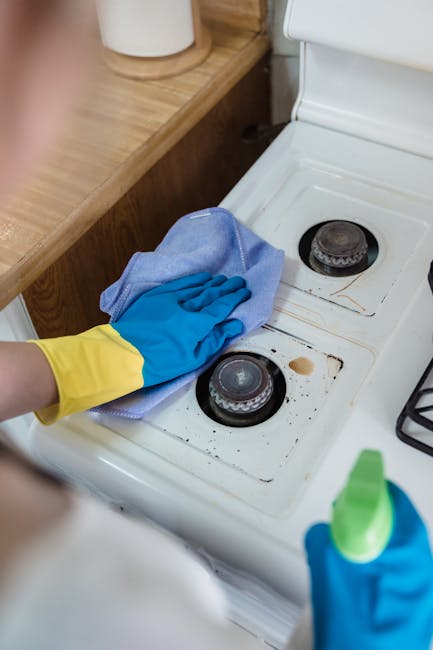
Misleading cheap oven cleaning claims in Kennington real cost to expect
If you have been hunting for a bargain and found an oven clean that sounds almost too good to be true, there is probably a reason. In Kennington, cheap oven cleaning claims can look very tempting at first glance, but the final bill often tells a different story. The real cost to expect may include add-ons, exclusions, minimum call-out charges, or a rushed clean that only does half the job.
This guide breaks down what those claims usually mean in practice, what the hidden costs can look like, and how to judge value properly before you book. It is written to help you avoid the classic "GBP30 oven clean" trap. You know the one: great headline price, then suddenly the grease, racks, fan, trays, and hob are all extra. A bit annoying, frankly.
By the end, you will know how to compare quotes, what a proper oven clean should include, and how to spot signs of a trustworthy local provider. If you are also comparing wider cleaning options for your home, you may find our pages on oven cleaning, a professional oven cleaner, and pricing and quotes useful alongside this article.
Why misleading cheap oven cleaning claims in Kennington real cost to expect matters
Cheap-looking offers matter because oven cleaning is one of those services where the headline price can be wildly different from the finished experience. A low starting figure may not cover a heavily used oven, a double oven, a range cooker, or the fiddly bits that actually take the time. And let's face it, that is where most of the grime lives.
In a busy London home, an oven often carries layers of baked-on fat, spillovers, burnt sugar, and the odd forgotten tray that has seen better days. A quote that sounds unusually low may still be legitimate, but it should make you ask sharper questions: what is included, what costs extra, how long will it take, and what condition do they expect the oven to be in beforehand?
The reason this matters is simple. If you only compare the lowest advertised price, you may end up paying more than you would have with a transparent provider. Worse, a rushed or incomplete clean can leave you booking another service sooner than planned. That is not a saving. That is a loop.
A trustworthy cleaner should be upfront about the real cost to expect. If you are comparing providers, clarity matters as much as the final result. For many homeowners and landlords, a fair quote is usually more useful than a flashy one. If you want to understand what a transparent provider tends to publish, the about us and terms and conditions pages can tell you a lot about how a company operates.
How misleading cheap oven cleaning claims in Kennington real cost to expect works
Most misleading offers follow a fairly predictable pattern. The business advertises an eye-catching base price, then narrows the fine print so much that the headline is only relevant to a very specific oven condition. If your oven is larger than average, particularly dirty, has removable parts, or needs extra degreasing, the price changes.
Sometimes the "cheap" offer is not dishonest in a strict sense. It is just incomplete. The advertised amount may cover only a basic exterior wipe, or a limited clean of one oven type, or a job completed at quieter times with no tough carbon build-up. That can be fine if you know exactly what you are buying. The problem is that many customers do not realise the exclusions until the cleaner arrives.
In practical terms, the real cost to expect can be influenced by:
- oven size and type, such as single, double, or range
- level of soiling and burnt-on residue
- number of removable components
- access and parking practicality in Kennington streets
- time needed for proper dismantling and reassembly
- whether extras like trays, racks, hobs, or extractor areas are included
To be fair, a good cleaner should explain those variables before they start. If they cannot, that is a signal to slow down. You are not being fussy by asking. You are being sensible.
Key benefits and practical advantages
Clear pricing is not just about avoiding surprises. It also gives you a better end result. When a provider explains the scope properly, they usually plan the work more carefully, bring the right products, and allow enough time for a thorough finish.
The main benefits include:
- Better value for money: you compare like with like instead of chasing the cheapest headline.
- Fewer disputes: everyone knows what was agreed before the clean starts.
- More realistic expectations: you understand what the result should look like.
- Less disruption: no awkward add-on conversation halfway through the job.
- Better maintenance: a proper deep clean tends to keep your oven usable for longer.
There is also a quieter benefit. You feel more relaxed booking the service. No one likes staring at a half-cleaned oven and wondering whether they have just been upsold into the ground. A transparent quote removes a lot of that stress.
If you are looking beyond the oven and thinking about a wider reset for your home, services such as deep cleaning, one-off cleaning, or even house cleaning can sometimes make more sense overall than piecemeal bookings.
Who this is for and when it makes sense
This topic matters to anyone who wants an oven clean without paying for avoidable extras. That includes homeowners, tenants near the end of a tenancy, landlords, letting agents, and busy families who just want the kitchen to stop smelling faintly of last Sunday's roast.
It makes especially good sense if:
- you are comparing multiple local quotes in Kennington
- you have seen a very low advertised price online or on a leaflet
- your oven has heavy grease build-up
- you need the work done before an inspection, move-out, or family event
- you want a reliable cost rather than a guess
Some readers just want to know whether a cheap quote can still be worthwhile. The honest answer is yes, sometimes. A lower price is not automatically a scam. But it should come with specificity. If the company cannot explain what is included, what is excluded, and what changes the cost, you are not comparing a proper price. You are comparing a slogan.
For landlords and tenants especially, oven cleaning is often part of broader end-of-tenancy planning. In that case, it may be helpful to review end of tenancy cleaning alongside specialist oven care so the whole property is handled in one sensible plan.
Step-by-step guidance to compare real costs
If you want to avoid misleading cheap oven cleaning claims, use a methodical approach. A few careful questions can save both money and hassle.
- Identify your oven type. Single ovens, doubles, and range cookers usually have different cleaning requirements. Be specific when asking for a quote.
- Describe the condition honestly. Light use and heavy carbon build-up are not the same job. If the oven has not been cleaned in ages, say so.
- Ask what the quoted price includes. Door glass, racks, trays, knobs, seals, fan areas, and interior panels are all worth clarifying.
- Check for likely extras. Some providers charge more for multiple appliances, removable parts, or awkward access.
- Ask about time on site. A thorough oven clean takes time. If the appointment sounds suspiciously short, it may be a surface-level service.
- Request the full price in writing. Even a short confirmation message is better than a vague verbal promise.
- Compare value, not just price. A GBP10 difference is not the whole story if one provider includes far more work than the other.
One small but useful habit: keep the quote notes in your phone. It sounds basic, but it helps when you are comparing two or three options later in the week and everything has started to blur together.
Expert tips for better results
In our experience, the best way to avoid disappointment is to treat oven cleaning like a scope-of-work issue, not just a price issue. That sounds formal, but it really just means knowing what you are buying.
Here are a few practical tips that make a real difference:
- Ask about products used: not every cleaning method is suitable for every oven finish.
- Confirm whether the clean is done in your kitchen: some methods are on-site, others differ depending on the setup.
- Check whether the cleaner handles seals and vents carefully: these are easy to overlook.
- Make sure you know what "full clean" means: the phrase can be wonderfully vague if nobody defines it.
- Take a quick before photo: not because you expect drama, but because it helps judge the result fairly.
Another good sign is a provider who is happy to discuss their approach calmly rather than pushing you to book immediately. Trust usually sounds slower than a sales pitch. Funny that.
If you are comparing wider domestic services, a well-run cleaning company will usually have clearer standards around quotations, safety, and expectations than a rushed flyer advert.
Common mistakes to avoid
The biggest mistake is obvious, but still common: choosing the lowest headline price without checking what it covers. The second biggest is assuming every oven is the same. They are not. Not even close.
- Not asking about exclusions: this is where hidden costs hide.
- Ignoring the condition of the oven: heavy build-up usually changes the work needed.
- Forgetting about extra appliances: an oven may be cheap, but the hob or extractor can be extra.
- Assuming all cleaners use the same process: methods and standards vary.
- Booking in a rush: a quick decision often leads to a fuzzy quote.
- Not reading the service terms: nobody enjoys fine print, yet it can save a lot of bother.
There is also a subtler mistake: thinking that a cheaper job is always worse. Sometimes a local provider is genuinely leaner and more efficient. The issue is not cheapness itself. It is vague cheapness. That is the difference that trips people up.
Tools, resources and recommendations
You do not need specialist knowledge to compare oven cleaning quotes well, but a few simple tools help. Nothing fancy. No big spreadsheet drama unless that is your thing.
- A checklist of what the quote includes: use this to compare providers side by side.
- Your oven model details: handy if the cleaner asks about size or type.
- Photos of the oven interior and exterior: useful for remote quoting.
- Written quote confirmation: even a short email can reduce misunderstandings.
- The company's pricing page: good for checking how they explain cost structure and add-ons.
If you are evaluating a provider, pricing and quotes, payment and security, and insurance and safety are three pages worth reviewing closely. They help you understand not just what you pay, but how the business handles the work and the transaction.
If sustainability matters to you, it is also worth checking whether waste and product use are handled responsibly. A business with a sensible recycling and sustainability approach is usually thinking a bit further than the bare minimum.
Law, compliance, standards and best practice
For most customers, oven cleaning is a straightforward household service, but best practice still matters. In the UK, a reputable provider should operate safely, handle products responsibly, and be clear about what they are selling. That does not require you to become a compliance expert. Thankfully.
Good practice usually includes:
- clear pre-service pricing information
- plain language about exclusions and extra charges
- safe use of cleaning chemicals and equipment
- appropriate insurance for the work being carried out
- respect for customer property and access arrangements
- honest description of service outcomes
If you are a tenant, landlord, or managing agent, it also helps to keep an eye on the service agreement. For example, if a clean is needed before an inventory check, the expectation should be realistic and documented. No one wants a conversation later about what "clean enough" means when the oven door is still visibly greasy.
For a trustworthy provider, policy pages are not just legal decoration. They signal how the business thinks. Pages such as health and safety policy, complaints procedure, and privacy policy are worth a quick look because they show whether the company takes the job seriously.
Options, methods and comparison table
When people compare oven cleaning offers, they often compare the wrong things. Below is a simple way to look at common options.
| Option | Typical appeal | Common risk | Best for |
|---|---|---|---|
| Very cheap headline offer | Low upfront cost | Hidden extras, limited scope, rushed work | Only very light jobs if terms are clear |
| Transparent fixed quote | Predictable price | May seem higher than ads at first glance | Most homeowners and tenants |
| Quote based on photos or description | Fast and convenient | Can change if the condition is misdescribed | Busy households, landlords, repeated customers |
| Full kitchen clean bundle | Better overall value | May include services you do not need | Move-outs, spring cleans, or deep refreshes |
The key point is that the cheapest headline option is not automatically the cheapest final option. Sometimes it is, but often it is only the cheapest sentence on the page. Small difference, big consequence.
If you need broader home support rather than just the oven, related services like domestic cleaning or one-off cleaning can help you judge whether the whole job is more cost-effective as a package.
Case study or real-world example
Here is a realistic example from the kind of situation people often face. A Kennington resident sees an advert promising a cheap oven clean. The price looks brilliant. Then they mention, almost casually, that the oven is a double, the trays are still greasy from regular Sunday cooking, and the fan area has not been touched in a year. Suddenly the price changes. Not by a tiny bit either.
What happened? The initial offer was probably based on a basic single-oven assumption and lighter soiling. The real job involved more parts, more time, and more effort. If the customer had asked for the full scope in advance, the quote would likely have been more honest from the start.
That sort of scenario is not unusual. You see it especially around busy periods, or when someone is preparing for a move. The lesson is simple: if a quote sounds unusually cheap, ask what kind of oven and condition the price assumes. It often solves the mystery in about thirty seconds.
And if the answer is vague? That is your answer, really.
Practical checklist
Use this before you book any oven clean in Kennington:
- Have I identified my oven type correctly?
- Have I described the current condition honestly?
- Do I know what the quoted price includes?
- Have I asked whether racks, trays, glass, and seals are included?
- Are there any likely extras or minimum charges?
- Is the price confirmed in writing?
- Have I checked the provider's safety and insurance information?
- Do I understand the expected result clearly?
- Does the provider have a clear complaints process if needed?
- Does the quote feel realistic for the amount of work involved?
If you can answer yes to most of those, you are in a much better position. Not perfect, just much better.
Get a free quote today and see how much you can save.
Conclusion
Misleading cheap oven cleaning claims in Kennington are usually less about outright fraud and more about incomplete pricing, unclear scope, and optimistic headline promises. The real cost to expect depends on the oven itself, the level of build-up, and whether the quote includes the things that actually take time. Once you know what to look for, the choice becomes much easier.
Choose clarity over noise. Ask the awkward questions. Compare like with like. A sensible quote may not be the cheapest line on the page, but it is often the best value in the end. And that, honestly, is what most people want: no drama, no surprises, just a clean oven and a kitchen that feels good to walk into again.
Frequently Asked Questions
What is the real cost to expect from cheap oven cleaning claims in Kennington?
The real cost often ends up higher than the headline price once extras, oven size, or heavy grease are factored in. A proper quote should explain the full scope before booking.
Why do some oven cleaning prices look so low?
Some adverts are based on the simplest possible job, such as a small oven with light soiling. Others leave out extras like racks, trays, or deep carbon removal. That is where the gap appears.
Are cheap oven cleaning offers always misleading?
No, not always. Some are genuine introductory prices or light-clean specials. The issue is whether the terms are clear enough for you to know what you are actually buying.
What should a full oven clean usually include?
It should normally cover the main internal oven area, removable parts, glass doors, and key grease build-up points. But exact inclusions vary, so it is best to ask before booking.
Can a cheap oven clean turn into a more expensive job on the day?
Yes, especially if the cleaner arrives and finds a double oven, range cooker, or much heavier build-up than expected. That is why written scope and honest descriptions matter.
How do I compare two oven cleaning quotes properly?
Compare what each quote includes, not just the total price. Look at oven type, removable parts, extra charges, and whether the price is fixed or conditional.
Is a higher price always better value?
Not automatically. A higher price only makes sense if it includes more thorough work, better safety, clearer guarantees, or fewer extras. Value is the combination, not just the number.
Should I ask for the quote in writing?
Yes. Written confirmation helps prevent misunderstandings about the price and what the cleaner agreed to do. Even a simple message can be very useful later.
What if my oven is very greasy or hasn't been cleaned for a long time?
Say so upfront. Heavy build-up usually affects the time and cost needed. A realistic quote is better than a cheap one that changes later.
Can oven cleaning be part of a bigger home cleaning plan?
Absolutely. For some homes, especially before a move or after a busy period, oven cleaning works well alongside broader services like domestic or one-off cleaning.
What signs suggest a cleaning company is trustworthy?
Clear pricing, published policies, sensible explanations, and a professional tone are all good signs. If a company can explain its process without dodging basic questions, that is encouraging.
What is the safest way to avoid hidden charges?
Be specific about your oven, ask what is included, confirm extra charges in advance, and keep the quote in writing. That combination catches most surprise costs before they happen.